6052 Ridge Rd, Florence, KY 41042


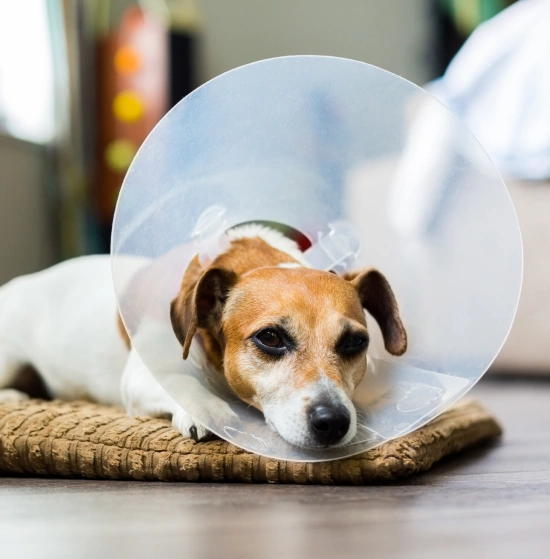

A Decision That Shapes Your Dog's Future
Few decisions you make for your dog will have as lasting an impact as choosing to spay or neuter them. These procedures are about more than just population control. They are foundational to your dog's lifelong health, influence their behavior in meaningful ways, and can even add years to the time you spend together.
At Pet Wellness Group, we know this decision often comes with questions. When is the right time? Is it really necessary? Will my dog change? Our team is here to help you sort through all of it with honest, breed-specific guidance and a surgical experience designed around your dog's safety and comfort.
What Spaying and Neutering Actually Involve
While the terminology can sometimes feel clinical, both procedures are straightforward, well-established surgeries that veterinarians perform every day. Both are completed under general anesthesia in our fully equipped surgical suite.
- Spaying removes the ovaries and uterus in female dogs, eliminating heat cycles and the ability to reproduce
- Neutering removes the testicles in male dogs, eliminating the production of testosterone and the ability to reproduce
Most dogs go home the same day to recover at their own pace, surrounded by the people and places they love most.
Disease Prevention That Lasts a Lifetime
Some of the most compelling reasons to spay or neuter your dog have to do with preventing serious diseases later in life. The medical research supporting these benefits is extensive.
For female dogs, spaying eliminates the risk of pyometra, a life-threatening uterine infection that affects a significant percentage of unspayed female dogs as they age. Spaying also dramatically reduces the risk of mammary tumors, which are the most common type of tumor in unspayed female dogs and can be malignant in nearly half of cases. Removing the ovaries and uterus also takes uterine and ovarian cancers off the table entirely.
For male dogs, neutering eliminates the possibility of testicular cancer and significantly reduces the risk of prostate enlargement, infections, and certain hormone-related conditions.
These are not minor concerns; they are health issues that affect quality of life, can be expensive to treat, and in some cases, can be fatal. Spaying and neutering offer one of the simplest forms of preventive medicine available.
How Behavior May Improve
Hormones drive a lot of canine behavior, especially in unaltered dogs. While spaying or neutering will not change your dog's fundamental personality, it can ease many behaviors that are inconvenient at best and dangerous at worst.
Pet parents often notice the following changes after surgery:
- A reduced drive to wander, escape, or roam in search of a mate
- Less territorial urine marking, especially indoors
- Decreased mounting behavior
- Lower likelihood of dog-on-dog aggression in male dogs
- An end to heat cycles in females, which means no more bleeding, restlessness, or unwanted suitors
- Calmer interactions in multi-pet households
- A more focused, settled demeanor overall
For working families, multi-dog households, or anyone whose dog has shown hormone-driven behaviors, these changes can transform daily life.
When to Spay or Neuter Your Dog
One of the most important conversations to have with your veterinarian is when to spay or neuter your dog. Not too long ago, the standard recommendation was around 6 months for every dog. Recent research has changed that picture significantly, especially for larger breeds.
Here is a general framework, though we always personalize the recommendation:
- Toy and small breeds (under 25 pounds) typically do well with spaying or neutering between 6 and 9 months
- Medium breeds (25 to 50 pounds) often benefit from waiting until 9 to 12 months
- Large breeds (50 to 90 pounds) may benefit from waiting until 12 to 15 months for full skeletal maturity
- Giant breeds (over 90 pounds) often do best when surgery is performed between 18 and 24 months
For larger dogs, allowing the growth plates to close fully before surgery can reduce the risk of certain orthopedic and joint issues later in life. Our team will assess your dog's breed, growth, and health to recommend timing that fits them as an individual.
A Team You Can Trust With Your Pet
Handing your dog over for surgery requires real trust, and we never take that lightly. From the moment you call to schedule through the day of surgery and beyond, we keep the lines of communication wide open. We will explain everything in plain language, answer your questions thoroughly, and follow up after surgery to make sure recovery is going smoothly. Your dog is in good hands here, and we are honored you have chosen us to care for them.